
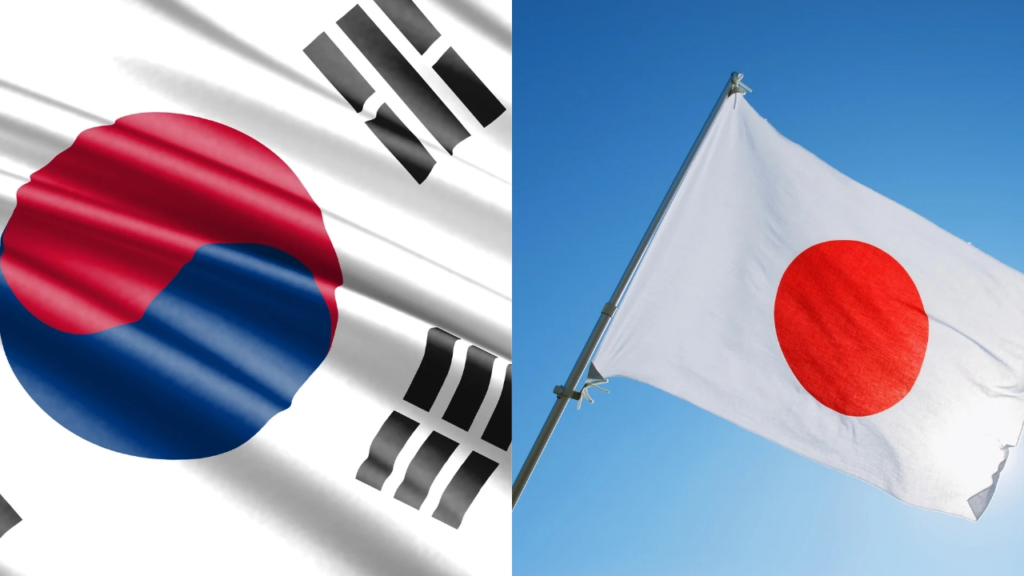
South Korea and Japan have reaffirmed their commitment to the complete denuclearisation of the Korean Peninsula while agreeing to strengthen defence cooperation during high-level ministerial talks in Seoul. The meeting marked another step in the two neighbours’ efforts to improve relations despite longstanding historical disputes. Both governments described the regional security environment as increasingly challenging.
South Korean Defence Minister Ahn Gyu-back and his Japanese counterpart Shinjiro Koizumi agreed to expand bilateral cooperation as well as coordination with the United States. The ministers said closer collaboration was necessary to maintain peace and stability in Northeast Asia. Their meeting represented the sixth round of defence talks between the two countries.
The two sides agreed to revive joint humanitarian search-and-rescue exercises, the first such drills in nearly a decade. Military officials also pledged to continue exchanges between South Korea’s Black Eagles aerobatic team and Japan’s Blue Impulse demonstration squadron. Officials said the activities would strengthen operational coordination and mutual trust.
Discussions also covered a possible military logistics support agreement that would allow both countries to provide supplies such as fuel, food and other logistical assistance during joint activities. Although negotiations are continuing, officials described the talks as constructive and said further technical discussions would follow. The proposal reflects growing defence cooperation between the two US allies.
South Korea and Japan have steadily rebuilt diplomatic relations since 2022 with encouragement from Washington, which has sought closer trilateral cooperation to address regional security challenges. Recent summits between President Lee Jae Myung and Prime Minister Sanae Takaichi have expanded cooperation beyond defence into areas including energy security, technology and economic resilience. Both governments have emphasised the importance of maintaining regular high-level dialogue.
Despite the improving relationship, sensitive historical issues remain unresolved. Disputes over Japan’s colonial rule of the Korean Peninsula and competing claims over the Dokdo, known in Japan as Takeshima, islands continue to generate political friction. Earlier this year, Seoul protested against a Japanese government event commemorating the disputed territory.
North Korea’s advancing nuclear and missile programmes featured prominently during the discussions. The ministers reaffirmed their shared objective of achieving the denuclearisation of the Korean Peninsula while strengthening deterrence through closer security cooperation with Washington. Officials also expressed concern over Pyongyang’s expanding military relationship with Russia.
Both governments said they would continue institutionalising defence dialogue through regular ministerial meetings and practical military cooperation. Officials indicated that additional exchanges and joint exercises are expected later this year as Seoul and Tokyo seek to reinforce security coordination amid evolving geopolitical challenges in the Indo-Pacific.