



By using this site, you agree to the Privacy Policy and Terms of Use.
Accept
Inframe AsiaInframe Asia
  • Asia
    AsiaShow More
  • Business
    BusinessShow More
  • Entertainment
    EntertainmentShow More
  • Lifestyle
    LifestyleShow More
    Why Some of the World’s Most Expensive Coffee Is Made From Animal Waste
    By Ayu Maharani
    Comodo Island
    The Indonesian Island Where Nobody Is Allowed to Stay After Sunset
    By Ayu Maharani
    Tonlé Sap Lake
    The Asian Lake That Disappears Almost Every Year
    By Ayu Maharani
    Why Japan Has Entire Villages With More Dolls Than People
    By Ayu Maharani
  • News
    NewsShow More
    Roy Suryo and Doctor Tifa to Face Trial in Jokowi Diploma Defamation Case
    By Fajar Nugroho
  • Science
    ScienceShow More
  • Sports
    SportsShow More
  • Tech
    TechShow More
    The Photo You Just Took Doesn’t Actually Exist
    By Andika Ramadhan
Sign In
Font ResizerAa
Inframe AsiaInframe Asia
Font ResizerAa
  • Asia
  • Business
  • Entertainment
  • Lifestyle
  • News
  • Science
  • Sports
  • Tech
  • Asia
    • Central Asia
    • East Asia
    • Middle East
    • South Asia
    • Southeast Asia
  • Business
    • Companies
    • Economy
    • Markets
    • Real Estate
    • Startups
  • Entertainment
    • Celebrities
    • Gaming
    • Movies
    • Music
    • Television
  • Lifestyle
    • Fashion
    • Food
    • Health
    • Relationships
    • Travel
  • News
    • Crime
    • Government
    • Politics
    • Society
    • World
  • Science
    • Energy
    • Environment
    • Health Science
    • Research
    • Space
  • Sports
    • Basketball
    • Esports
    • Football
    • Motorsport
    • Other Sports
  • Tech
    • AI
    • Cybersecurity
    • Gadgets
    • Internet
    • Software
Have an existing account? Sign In
Follow US

Home | Tech | The Photo You Just Took Doesn’t Actually Exist

TechGadgets

The Photo You Just Took Doesn’t Actually Exist

Andika Ramadhan
Andika Ramadhan
Avatar photo
ByAndika Ramadhan
Andika Ramadhan is a technology writer with a passion for exploring the latest innovations in software, artificial intelligence, gadgets, cybersecurity, cloud computing, and the digital world....
June 25, 2026
Share
SHARE

You tap the shutter button, glance at the screen, and see a perfectly balanced photo. The sky is blue instead of washed out. Faces are bright without appearing overexposed. Shadows reveal details that seemed invisible just moments earlier.

It feels like a faithful record of what your camera saw.

In reality, there is a good chance that image never existed—not even for a fraction of a second.

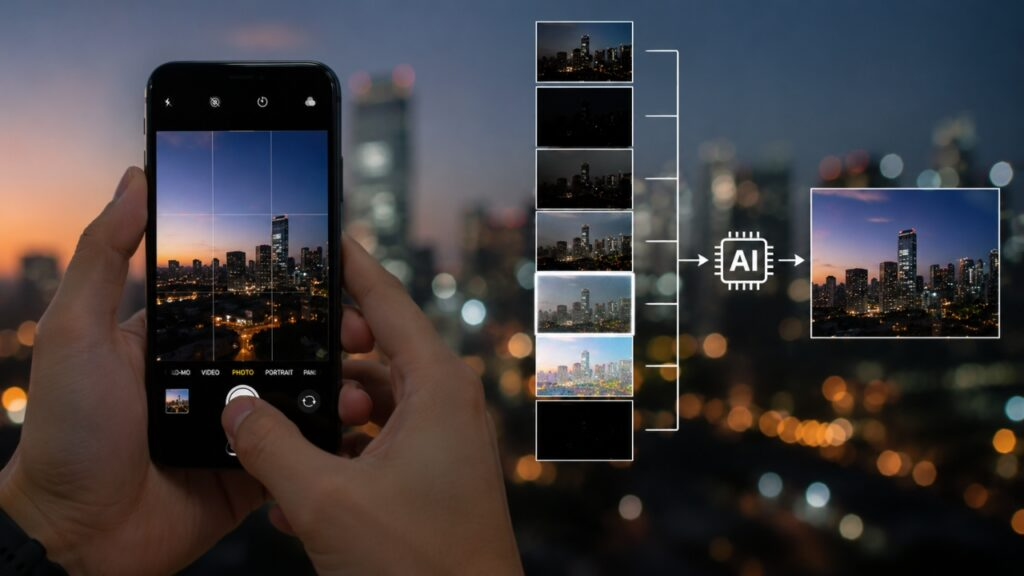
Modern smartphones no longer capture photographs in the traditional sense. Instead of freezing a single moment, many devices record multiple images before and after the shutter button is pressed. Some frames are intentionally dark to preserve highlights. Others are brighter to reveal details hidden in shadows. Additional frames may focus on reducing noise, correcting motion, or sharpening textures.

Only after all of those images have been collected does the phone begin creating the photograph that eventually appears in your gallery.

The process usually takes less than a second. Most people never realize it is happening.

This approach, known as computational photography, has quietly become one of the biggest changes in consumer electronics over the past decade. While manufacturers continue promoting larger sensors and better lenses, much of today’s image quality comes from software making thousands—or even millions—of decisions every time the shutter is pressed.

The phone first analyzes the scene. It identifies the sky, buildings, trees, food, pets, or people. It estimates where light should be brighter, which parts should remain darker, and whether faces need additional exposure. If someone blinked during one frame, another image may replace their eyes. If your hand moved slightly, the device may borrow sharper details from a different frame captured milliseconds earlier.

By the time the final image appears, it has become a carefully assembled interpretation rather than a direct recording.

Night photography offers perhaps the clearest example.

A decade ago, taking photos after sunset almost guaranteed grainy, blurry results unless a flash was used. Today’s smartphones often produce bright, colorful nighttime images that appear impossible for such tiny cameras.

The reason is simple. They are rarely relying on a single exposure.

Instead, the phone rapidly captures numerous photographs, aligns them with extraordinary precision, removes digital noise, compensates for tiny hand movements, and combines the best information from each frame into one final image. What appears to be a single photograph may actually contain visual data gathered over several seconds.

Portrait mode works in much the same way.

Professional cameras create blurred backgrounds through optics, using large sensors and specialized lenses. Smartphones simply do not have enough physical space to achieve the same effect naturally.

Instead, they build a depth map of the scene, separating the subject from the background using artificial intelligence. The soft blur behind a person is often generated after the photo has already been taken.

Even zoom has become partly synthetic.

When digital zoom begins reducing image quality, many smartphones analyze surrounding pixels, compare patterns, and reconstruct details that were never fully captured by the sensor. The result often looks surprisingly convincing, even though some of the fine detail has effectively been estimated rather than directly photographed.

This represents a fundamental shift in what cameras actually do.

For more than a century, cameras were designed to record light as accurately as possible. Today’s smartphones increasingly aim to produce images that people find pleasing, even if doing so requires changing what the sensor originally captured.

The software may brighten a sunset, smooth skin tones, deepen blue skies, reduce reflections, or make food appear more vibrant. In some situations, it may even replace facial expressions with better versions captured moments before or after the shutter button was pressed.

Different smartphone brands approach these decisions differently. The exact same scene photographed by several flagship devices often produces noticeably different results—not because the world changed, but because each manufacturer’s algorithms interpreted it differently.

The next time you take a photo with your smartphone, it is worth remembering that the image on your screen is probably not a frozen instant from reality.

It is the result of hundreds of calculations, dozens of invisible decisions, and multiple photographs woven together so seamlessly that the original moments disappear, leaving behind a picture that never truly existed at any single point in time.


TAGGED:CameraPhotography
Share This Article
Facebook Copy Link Print
Avatar photo
ByAndika Ramadhan
Andika Ramadhan is a technology writer with a passion for exploring the latest innovations in software, artificial intelligence, gadgets, cybersecurity, cloud computing, and the digital world. He enjoys turning complex tech topics into clear, practical, and engaging content for readers of all backgrounds. As a Tech author, Andika covers emerging technologies, product launches, digital trends, and industry developments, helping readers understand how technology continues to transform everyday life and business.
Previous Article Comodo Island The Indonesian Island Where Nobody Is Allowed to Stay After Sunset
Next Article Roy Suryo and Doctor Tifa to Face Trial in Jokowi Diploma Defamation Case
Leave a Comment

Leave a Reply Cancel reply

Your email address will not be published. Required fields are marked *

Popular Today

Why Japan Has Entire Villages With More Dolls Than People

A remote village in Japan has more life-sized dolls than human residents.…

The Asian Lake That Disappears Almost Every Year

Every year, one of Southeast Asia's largest lakes undergoes an extraordinary transformation.…

The Indonesian Island Where Nobody Is Allowed to Stay After Sunset

As the last boats leave before sunset, one Indonesian island returns entirely…

The Photo You Just Took Doesn’t Actually Exist

Your smartphone probably didn't capture a single photo. Every time you press…

Roy Suryo and Doctor Tifa to Face Trial in Jokowi Diploma Defamation Case

Indonesian prosecutors have transferred the case against Roy Suryo and Doctor Tifa…

Asia
  • Central Asia
  • East Asia
  • Middle East
  • South Asia
  • Southeast Asia
Business
  • Companies
  • Economy
  • Markets
  • Real Estate
  • Startups
Entertainment
  • Celebrities
  • Gaming
  • Movies
  • Music
  • Television
Lifestyle
  • Fashion
  • Food
  • Health
  • Relationships
  • Travel
News
  • Crime
  • Government
  • Politics
  • Society
  • World
Science
  • Energy
  • Environment
  • Health Science
  • Research
  • Space
Sports
  • Basketball
  • Esports
  • Football
  • Motorsport
  • Other Sports
Tech
  • AI
  • Cybersecurity
  • Gadgets
  • Internet
  • Software
INFRAME ASIA
  • About Us
  • Advertise With Us
  • Career
  • Privacy Policy
  • Terms of Use
  • FTC Disclosure
  • Disclaimer
  • Contact Us

Copyright 2026 by INFRAME ASIA by INFRAME MEDIA GROUP INDONESIA

Asia
  • Central Asia
  • East Asia
  • Middle East
  • South Asia
  • Southeast Asia
Business
  • Companies
  • Economy
  • Markets
  • Real Estate
  • Startups
Entertainment
  • Celebrities
  • Gaming
  • Movies
  • Music
  • Television
Lifestyle
  • Fashion
  • Food
  • Health
  • Relationships
  • Travel
News
  • Crime
  • Government
  • Politics
  • Society
  • World
Science
  • Energy
  • Environment
  • Health Science
  • Research
  • Space
Sports
  • Basketball
  • Esports
  • Football
  • Motorsport
  • Other Sports
Tech
  • AI
  • Cybersecurity
  • Gadgets
  • Internet
  • Software
INFRAME ASIA
  • About Us
  • Advertise With Us
  • Career
  • Privacy Policy
  • Terms of Use
  • FTC Disclosure
  • Disclaimer
  • Contact Us

Copyright 2026 by INFRAME ASIA by INFRAME MEDIA GROUP INDONESIA

inframe asia
Welcome Back!

Sign in to your account

Username or Email Address
Password

Lost your password?