
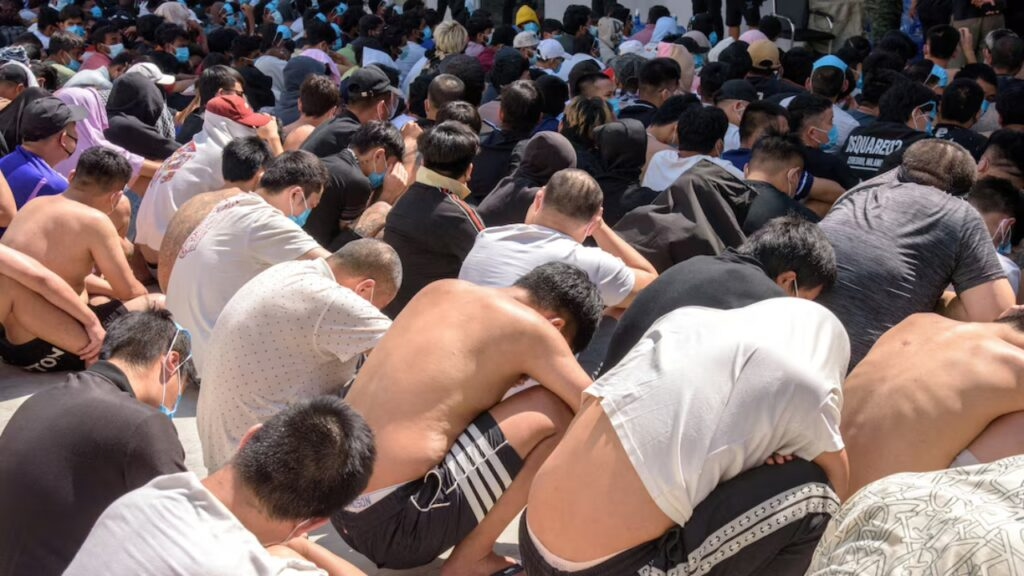
More than 5,300 people remain trapped inside online scam compounds operating near Myanmar’s border with Thailand, according to a human rights organisation that is urging authorities to launch new rescue operations. The Civil Society Network for Human Trafficking Victim Assistance said many of those still being held are victims of human trafficking who were lured to the region with promises of legitimate employment. The group warned that many compounds continue to operate despite earlier multinational crackdowns.
The organisation said the victims are being held at four locations controlled by the Democratic Karen Buddhist Army (DKBA), an armed group operating in southeastern Myanmar. Those still trapped include people from China, Myanmar, Thailand, the Philippines, Malaysia, Brazil, Russia and several African countries. Many are believed to have been forced to participate in online fraud schemes targeting victims around the world.
Online scam compounds have become one of Southeast Asia’s fastest-growing forms of organised crime. Criminal networks recruit workers by advertising well-paid jobs before confiscating their passports and forcing them to carry out investment fraud, romance scams and other cybercrime operations. Victims who refuse to work are frequently subjected to violence, intimidation and other forms of abuse.
Thailand, China and Myanmar launched a coordinated crackdown earlier this year that resulted in the rescue of thousands of people from compounds around Myawaddy. While the operation disrupted several criminal networks, rights groups say many facilities remain active and continue receiving new trafficking victims. They argue that rescue efforts have slowed despite the scale of the problem.
The United Nations has previously described scam compounds across Myanmar and neighbouring countries as part of a multibillion-dollar criminal industry. Investigators say organised crime groups generate enormous profits through fraudulent investment schemes, cryptocurrency scams and other online deception targeting victims across Asia, Europe and North America. Human trafficking has become a central part of the business model supporting those operations.
According to the rights group, many victims remain unable to leave because armed guards control access to the compounds. Some are reportedly forced to work long hours under constant surveillance while facing punishment if they fail to meet financial targets. Families in several countries continue searching for relatives believed to be trapped inside the compounds.
The organisation has called on Thai authorities to coordinate further cross-border operations with neighbouring countries to secure the release of those still being held. It also urged governments whose citizens remain trapped to strengthen cooperation on identification and repatriation efforts. Rights advocates say international coordination will be essential if the remaining compounds are to be dismantled.
Myanmar’s military-backed government has previously announced measures targeting online scam operations, but the latest reports suggest criminal networks continue to operate in areas beyond the effective control of central authorities. The rights group says thousands of trafficking victims remain at risk until all remaining compounds are closed and those responsible are brought to justice.