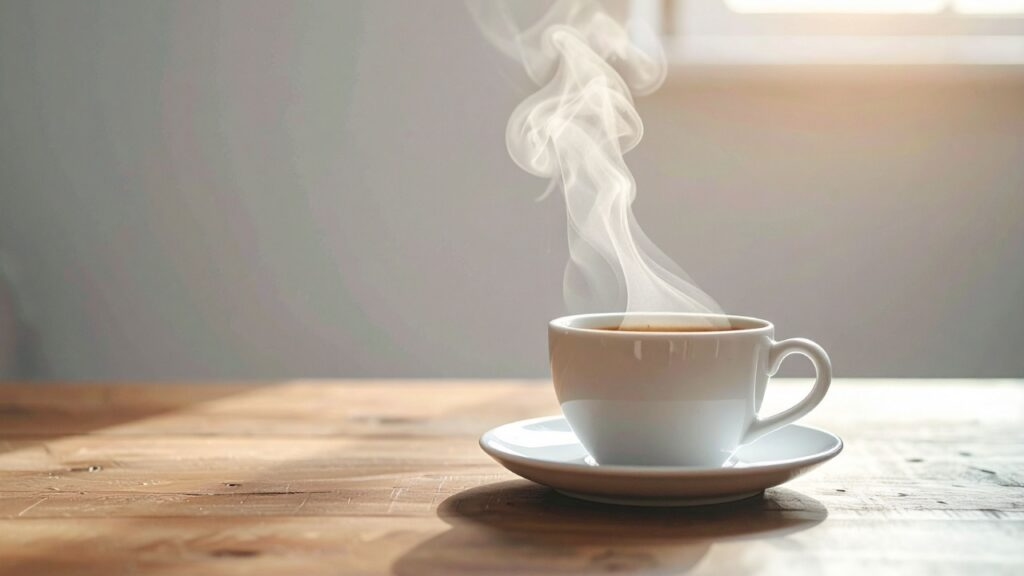

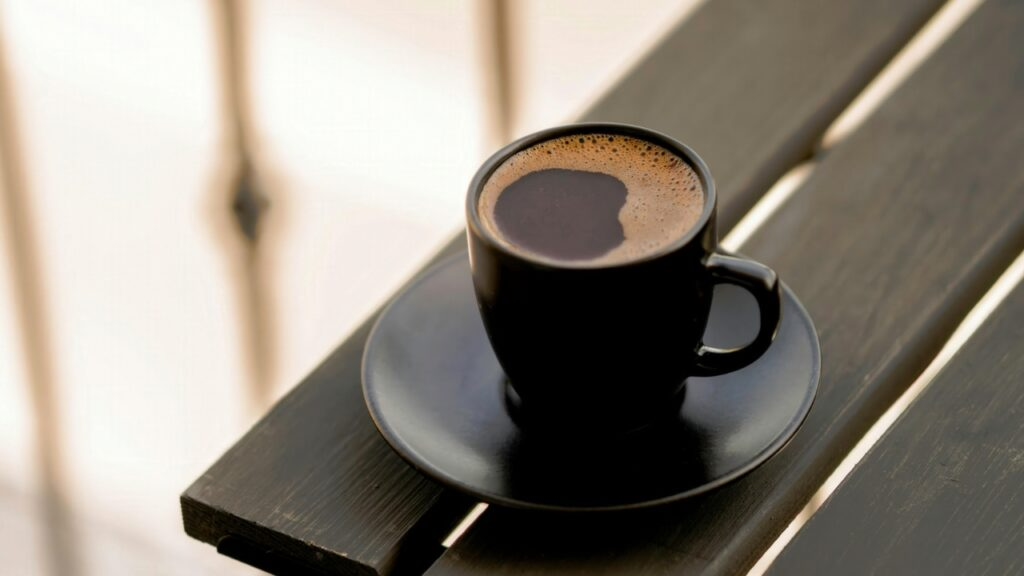
Coffee has never been more available, yet people have never spent more time thinking about how they drink it. What was once viewed primarily as a quick source of caffeine has gradually evolved into something far more personal. Across major cities and small towns alike, coffee is becoming a ritual shaped by atmosphere, craftsmanship, and conversation rather than convenience alone. The simple act of ordering a cup now says as much about lifestyle as it does about taste.
That transformation can be traced to the changing role of cafés themselves. They are no longer places people visit only before work or during short breaks, but spaces where meetings are held, creative ideas are developed, and friendships unfold over several hours. Comfortable interiors, carefully designed lighting, and thoughtfully curated music have become just as important as the coffee served behind the counter. For many visitors, the environment is part of the product.
The growing appreciation for specialty coffee has also changed what consumers expect from every cup. Questions about bean origin, roasting methods, brewing techniques, and flavor profiles have become common even among casual coffee drinkers. Instead of asking for the strongest coffee available, customers are increasingly interested in acidity, sweetness, body, and aroma. Coffee tasting has begun to resemble the language once reserved for fine wine.
Asia has played a remarkable role in this evolution. Japan’s meticulous pour-over culture continues to influence cafés around the world, while South Korea has transformed coffee shops into destinations known for architecture and design as much as beverages. Vietnam’s robust coffee traditions, from egg coffee to slow-drip brewing, have attracted international attention, while Indonesia’s diverse coffee-growing regions continue to gain recognition among specialty roasters. Together, these traditions have expanded the global conversation about what coffee can be.
Technology has quietly reshaped coffee culture as well. Mobile ordering, digital loyalty programs, and home brewing equipment have made high-quality coffee more accessible than ever before. At the same time, social media has introduced millions of people to independent cafés they might otherwise never have discovered. A single photograph of a beautifully prepared latte can travel far beyond the neighborhood where it was served.
Changing work habits have reinforced coffee’s role throughout the day. The rise of remote and hybrid work has blurred the line between office and café, encouraging more people to use coffee shops as temporary workplaces. Morning rushes have gradually been replaced by steady streams of customers arriving throughout the afternoon, each looking for a place to work, read, or simply pause between appointments. Coffee has become part of a flexible daily routine rather than a fixed morning ritual.
Consumers are also becoming more mindful of what goes into their cup. Interest has grown in responsibly sourced beans, direct trade relationships, and environmentally friendly packaging as people pay closer attention to the journey from farm to café. Plant-based milk alternatives, lower-sugar beverages, and seasonal ingredients have expanded menus without replacing traditional favorites. These choices reflect broader changes in how people think about food and drink.
Independent cafés continue to thrive despite competition from global chains. Many attract loyal customers not through scale but through personality, local identity, and genuine hospitality. Baristas have become storytellers as much as beverage makers, introducing customers to unfamiliar beans, brewing methods, and producing regions. The relationship between café and community has become one of the defining characteristics of modern coffee culture.
Coffee today represents far more than a daily caffeine fix. It has become a meeting place for cultures, ideas, craftsmanship, and everyday routines that extend well beyond the cup itself. As tastes continue to evolve, the global coffee scene is increasingly defined not by how quickly people drink their coffee, but by how much they value the experience that surrounds it.