

By using this site, you agree to the Privacy Policy and Terms of Use.
Accept
Inframe AsiaInframe Asia
  • Asia
    AsiaShow More
  • Business
    BusinessShow More
  • Entertainment
    EntertainmentShow More
  • Lifestyle
    LifestyleShow More
    Why Some of the World’s Most Expensive Coffee Is Made From Animal Waste
    By Ayu Maharani
    Comodo Island
    The Indonesian Island Where Nobody Is Allowed to Stay After Sunset
    By Ayu Maharani
    Tonlé Sap Lake
    The Asian Lake That Disappears Almost Every Year
    By Ayu Maharani
    Why Japan Has Entire Villages With More Dolls Than People
    By Ayu Maharani
  • News
    NewsShow More
    Roy Suryo and Doctor Tifa to Face Trial in Jokowi Diploma Defamation Case
    By Fajar Nugroho
  • Science
    ScienceShow More
  • Sports
    SportsShow More
  • Tech
    TechShow More
    The Photo You Just Took Doesn’t Actually Exist
    By Andika Ramadhan
Sign In
Font ResizerAa
Inframe AsiaInframe Asia
Font ResizerAa
  • Asia
  • Business
  • Entertainment
  • Lifestyle
  • News
  • Science
  • Sports
  • Tech
  • Asia
    • Central Asia
    • East Asia
    • Middle East
    • South Asia
    • Southeast Asia
  • Business
    • Companies
    • Economy
    • Markets
    • Real Estate
    • Startups
  • Entertainment
    • Celebrities
    • Gaming
    • Movies
    • Music
    • Television
  • Lifestyle
    • Fashion
    • Food
    • Health
    • Relationships
    • Travel
  • News
    • Crime
    • Government
    • Politics
    • Society
    • World
  • Science
    • Energy
    • Environment
    • Health Science
    • Research
    • Space
  • Sports
    • Basketball
    • Esports
    • Football
    • Motorsport
    • Other Sports
  • Tech
    • AI
    • Cybersecurity
    • Gadgets
    • Internet
    • Software
Have an existing account? Sign In
Follow US

Home | Lifestyle | The Indonesian Island Where Nobody Is Allowed to Stay After Sunset

LifestyleTravel

The Indonesian Island Where Nobody Is Allowed to Stay After Sunset

Ayu Maharani
Ayu Maharani
Avatar photo
ByAyu Maharani
Ayu Maharani is a lifestyle writer who loves exploring topics related to everyday living, wellness, personal growth, relationships, travel, fashion, and modern lifestyle trends. She enjoys...
June 25, 2026
Share
Comodo Island
SHARE

Most tourist destinations become livelier as the sun begins to set. Restaurants fill with visitors, hotels prepare for the evening, and waterfronts glow with lights long after dark.

On one small island off the coast of Indonesia, the opposite happens.

As afternoon fades into evening, the last boats leave. Visitors return to the mainland, park rangers complete their final patrols, and silence gradually replaces the sounds of tourism. By nightfall, the island belongs almost entirely to its wild inhabitants.

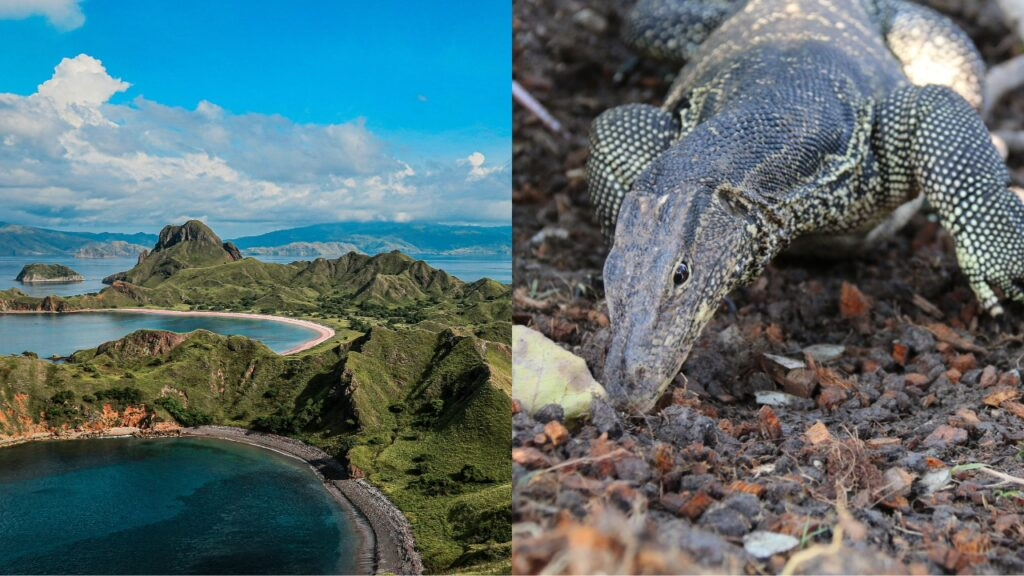
The island is Komodo Island, one of the few places on Earth where the world’s largest living lizard still roams freely in its natural habitat. While thousands of travelers visit each year, almost none remain after sunset.

The restriction is not designed to create an exclusive tourist experience. It exists because the island is home to the Komodo dragon, an apex predator capable of growing more than three meters in length and weighing over 70 kilograms. Although these reptiles often appear slow while resting, they can move with surprising speed over short distances and are highly adapted hunters.

Unlike safari parks or wildlife reserves where dangerous animals are separated from visitors by fences, Komodo Island remains a functioning ecosystem. The dragons roam freely across beaches, forests, and open grasslands, following the movements of deer, wild pigs, and other prey. Humans are simply temporary guests within their territory.

Every visitor entering the island must be accompanied by trained park guides. These guides are familiar with the dragons’ behavior and continuously monitor their surroundings, as the reptiles are capable of appearing unexpectedly even near ranger stations or popular walking trails.

The absence of overnight accommodation on Komodo Island reflects a broader conservation strategy. By limiting human activity after dark, authorities reduce disturbance to wildlife while minimizing unnecessary risks for visitors. Tourism continues during daylight hours, but once the final boats depart, the island returns to its natural rhythm.

Many travelers assume the dragons are active only during the hottest parts of the day. In reality, their movements depend on temperature, food availability, and seasonal conditions. They may rest for hours before suddenly becoming active, making their behavior difficult to predict with complete certainty.

Komodo dragons have survived on these islands for millions of years, evolving in relative isolation. Scientists believe their ancestors spread across parts of Australia and Indonesia before disappearing from most of their former range. Today, wild populations are found naturally only within a handful of islands in eastern Indonesia, making the region globally significant for biodiversity.

The surrounding waters are equally remarkable. The seas around Komodo Island form part of one of the world’s richest marine ecosystems, where strong currents transport nutrients that support coral reefs, manta rays, sea turtles, dolphins, and hundreds of fish species. For many visitors, the journey combines encounters with both one of the planet’s most famous reptiles and one of its most diverse underwater environments.

Despite its growing international reputation, access to the island remains carefully managed. Visitor numbers, designated hiking routes, and conservation measures are continually evaluated to balance tourism with the long-term protection of the species and its habitat.

For travelers, the experience is unlike visiting a conventional national park. There are no evening walks, no night safaris, and no hotels overlooking the landscape. As daylight disappears, nature quietly reclaims the island.

By sunrise, the first boats begin returning with another group of visitors, while the Komodo dragons continue exactly where they left off—living according to rhythms that have changed little for thousands of generations, long before the first tourists ever arrived.

TAGGED:Comodo IslandIndonesia
Share This Article
Facebook Copy Link Print
Avatar photo
ByAyu Maharani
Ayu Maharani is a lifestyle writer who loves exploring topics related to everyday living, wellness, personal growth, relationships, travel, fashion, and modern lifestyle trends. She enjoys sharing practical ideas and inspiration that help readers create a more balanced, fulfilling, and enjoyable life. As a Lifestyle author, Ayu covers a wide range of subjects, from self-improvement and productivity to home living, health, beauty, and lifestyle trends that shape how people live today.
Previous Article Tonlé Sap Lake The Asian Lake That Disappears Almost Every Year
Next Article The Photo You Just Took Doesn’t Actually Exist
Leave a Comment

Leave a Reply Cancel reply

Your email address will not be published. Required fields are marked *

Popular Today

Why Japan Has Entire Villages With More Dolls Than People

A remote village in Japan has more life-sized dolls than human residents.…

The Asian Lake That Disappears Almost Every Year

Every year, one of Southeast Asia's largest lakes undergoes an extraordinary transformation.…

The Indonesian Island Where Nobody Is Allowed to Stay After Sunset

As the last boats leave before sunset, one Indonesian island returns entirely…

The Photo You Just Took Doesn’t Actually Exist

Your smartphone probably didn't capture a single photo. Every time you press…

Roy Suryo and Doctor Tifa to Face Trial in Jokowi Diploma Defamation Case

Indonesian prosecutors have transferred the case against Roy Suryo and Doctor Tifa…

You Might Also Like

LifestyleFood

Why Some of the World’s Most Expensive Coffee Is Made From Animal Waste

By Ayu Maharani
Asia
  • Central Asia
  • East Asia
  • Middle East
  • South Asia
  • Southeast Asia
Business
  • Companies
  • Economy
  • Markets
  • Real Estate
  • Startups
Entertainment
  • Celebrities
  • Gaming
  • Movies
  • Music
  • Television
Lifestyle
  • Fashion
  • Food
  • Health
  • Relationships
  • Travel
News
  • Crime
  • Government
  • Politics
  • Society
  • World
Science
  • Energy
  • Environment
  • Health Science
  • Research
  • Space
Sports
  • Basketball
  • Esports
  • Football
  • Motorsport
  • Other Sports
Tech
  • AI
  • Cybersecurity
  • Gadgets
  • Internet
  • Software
INFRAME ASIA
  • About Us
  • Advertise With Us
  • Career
  • Privacy Policy
  • Terms of Use
  • FTC Disclosure
  • Disclaimer
  • Contact Us

Copyright 2026 by INFRAME ASIA by INFRAME MEDIA GROUP INDONESIA

Asia
  • Central Asia
  • East Asia
  • Middle East
  • South Asia
  • Southeast Asia
Business
  • Companies
  • Economy
  • Markets
  • Real Estate
  • Startups
Entertainment
  • Celebrities
  • Gaming
  • Movies
  • Music
  • Television
Lifestyle
  • Fashion
  • Food
  • Health
  • Relationships
  • Travel
News
  • Crime
  • Government
  • Politics
  • Society
  • World
Science
  • Energy
  • Environment
  • Health Science
  • Research
  • Space
Sports
  • Basketball
  • Esports
  • Football
  • Motorsport
  • Other Sports
Tech
  • AI
  • Cybersecurity
  • Gadgets
  • Internet
  • Software
INFRAME ASIA
  • About Us
  • Advertise With Us
  • Career
  • Privacy Policy
  • Terms of Use
  • FTC Disclosure
  • Disclaimer
  • Contact Us

Copyright 2026 by INFRAME ASIA by INFRAME MEDIA GROUP INDONESIA

inframe asia
Welcome Back!

Sign in to your account

Username or Email Address
Password

Lost your password?