

A teenager in Jakarta records a dance video using a song that was released only two days earlier. A café in Bangkok begins playing the same track before lunchtime. By evening, creators in São Paulo, London, and Los Angeles are using an identical 15-second clip in millions of videos. Long before most people know the artist’s name, the chorus has already become familiar around the world.
For much of the last century, that would have been almost impossible. Radio stations, television channels, and record stores once determined which songs reached the public. Success depended on airplay, physical album sales, and months of promotion. Today, a song can explode across continents before it has even climbed a national chart.
The transformation has been driven by platforms that were never designed to become music companies. Short-form video apps have turned songs into raw material for comedy, fashion, travel, sports, cooking, and entertainment. In many cases, listeners discover the most memorable part of a song through thousands of unrelated videos before they ever hear the complete track.
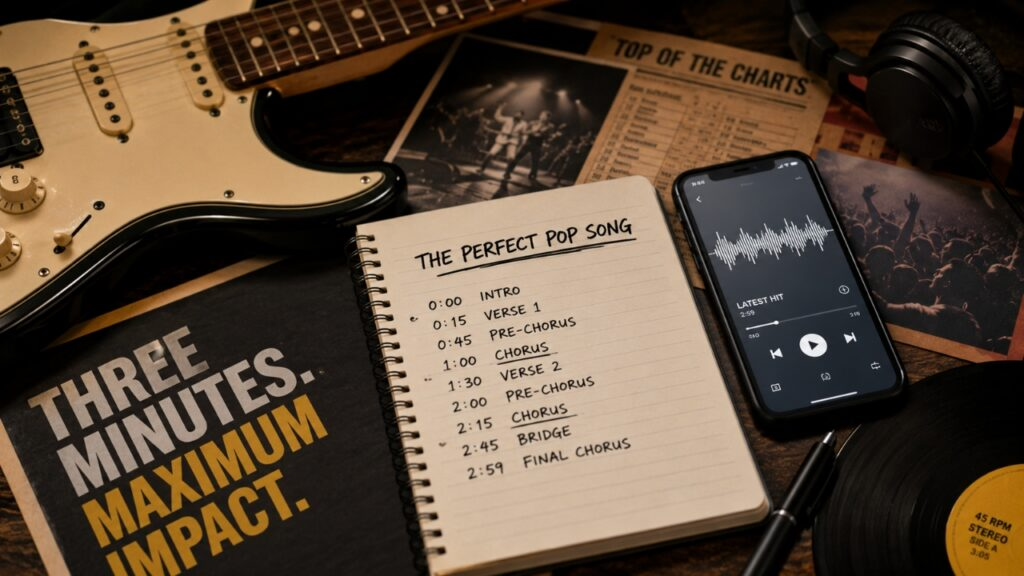
That shift has fundamentally changed the way music is written. Producers increasingly focus on creating an unforgettable moment within the opening seconds of a song, knowing it may become the only part millions of people ever hear. A catchy lyric, an unexpected beat drop, or a distinctive vocal line now carries enormous commercial value because it has the potential to spread independently across social media.
The strategy has reshaped the industry’s definition of a hit. A generation ago, a successful single was measured by radio requests or album sales. Today, record labels closely monitor how often a song is reused in videos, added to playlists, searched after going viral, or transformed into memes. A trend lasting only a few days can introduce an artist to audiences in dozens of countries simultaneously.
Some musicians have embraced the change, viewing social media as an opportunity that did not exist a decade ago. Artists without major record deals can now reach global audiences with little more than a smartphone and a compelling piece of music. Songs recorded in bedrooms have climbed international charts after unexpectedly gaining traction online, bypassing many of the traditional gatekeepers of the industry.
Others remain more cautious. Critics argue that the pressure to create “viral moments” encourages shorter songs, faster hooks, and simpler structures at the expense of artistic experimentation. Instead of building emotional narratives over several minutes, many tracks now compete to capture attention before a listener scrolls to the next video.
Yet the formula remains remarkably unpredictable. Record labels spend millions promoting songs that fail to resonate online, while completely unknown artists occasionally become international stars overnight after a single clip captures the internet’s attention. No algorithm has fully solved the mystery of why one chorus spreads around the world while thousands of others disappear unnoticed.
For listeners, the result is a new relationship with music itself. It is increasingly common to recognize the most famous line of a song without knowing its title, its artist, or how the remaining verses sound. In an era dominated by endless scrolling, fifteen seconds can be enough to turn an unknown recording into the next global hit.