

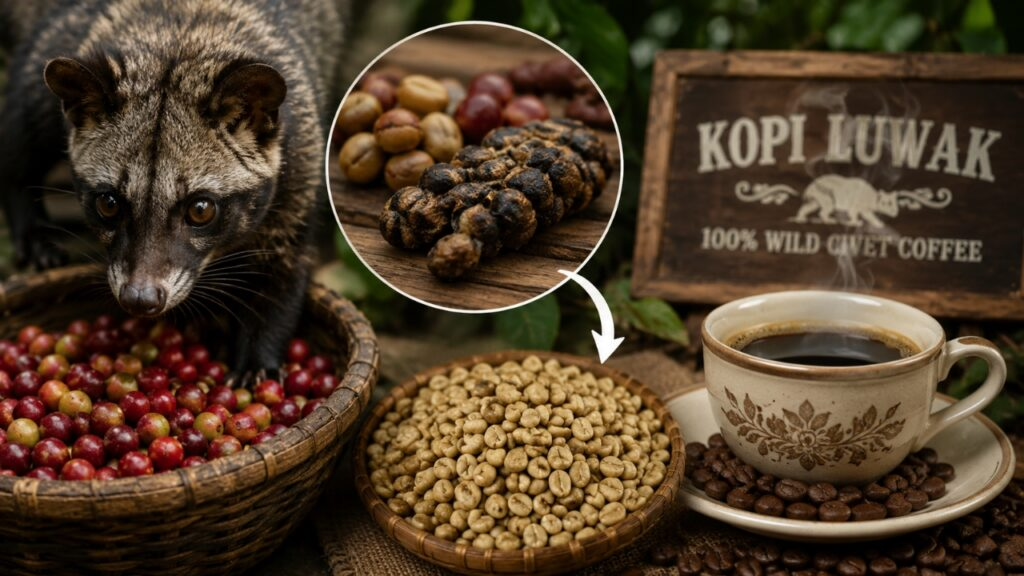
Few beverages inspire as much curiosity as a cup of coffee that begins its journey inside the digestive system of an animal.
For many first-time drinkers, the idea sounds more like an internet myth than a luxury product. Yet every year, coffee enthusiasts travel across Asia in search of beans that have passed through civets, elephants, or even certain bird species, with some varieties selling for hundreds of dollars per kilogram.
The best-known example is kopi luwak, which originated in Indonesia during the Dutch colonial era. Farmers observed that Asian palm civets consumed only the ripest coffee cherries before leaving the undigested beans behind. After being cleaned, processed, roasted, and brewed, the beans produced a coffee unlike any they had tasted before.
Scientists believe the difference comes from more than careful bean selection. As the cherries pass through the animal’s digestive tract, natural enzymes interact with the beans, altering their chemical composition. Some proteins associated with bitterness are partially broken down, resulting in a smoother and less acidic flavor once roasted.
The rarity of naturally collected beans helped transform kopi luwak into one of the world’s most expensive coffees. International demand surged after the coffee gained global attention through documentaries, travel programs, and the 2007 film The Bucket List, introducing millions of people to a product that had previously been known mainly within Indonesia.
Rising demand, however, brought unexpected consequences.
Wild civets naturally roam large territories and consume a wide variety of fruits alongside coffee cherries. As production expanded, some producers began keeping civets in small cages and feeding them almost exclusively coffee cherries to increase output. Animal welfare organizations later documented farms where civets showed signs of stress, poor nutrition, and inadequate living conditions, prompting criticism from conservation groups and coffee experts alike.
The controversy has changed consumer behavior. Many specialty coffee buyers now seek beans certified as being collected from wild civets rather than farmed animals, while others avoid kopi luwak altogether because verifying production methods remains difficult.
Indonesia is not the only country experimenting with animal-assisted coffee.
In northern Thailand, some producers have developed coffee processed by elephants. Unlike civets, elephants consume large quantities of fruit and vegetation, and the lengthy digestive process is believed to influence the beans in a different way. The resulting coffee is produced in extremely limited quantities, making it one of the rarest coffees available on the market.
Brazil has its own unusual variation involving the jacu bird, a wild species that naturally selects ripe coffee cherries before the beans are collected and processed. Like wild civets, the birds choose only the best fruit, making their feeding habits part of the production process.
For coffee researchers, these products represent an unusual intersection of biology, agriculture, and gastronomy. The digestive systems of different animals create distinct chemical changes inside the beans, producing flavor profiles that cannot easily be replicated through conventional processing methods.
Despite the fascination surrounding these coffees, experts continue to emphasize that rarity alone does not guarantee superior quality. Factors such as coffee variety, altitude, climate, harvesting techniques, fermentation, roasting, and brewing methods often have a greater influence on the final cup than the animal involved in the process.
Today, animal-processed coffees remain among the most unusual products in the global coffee industry. Some are prized for their rarity, others for their history, and many simply because they challenge conventional ideas about where exceptional food and drink can come from.